


Frida aims to solve personal care gap with new product line for older kids
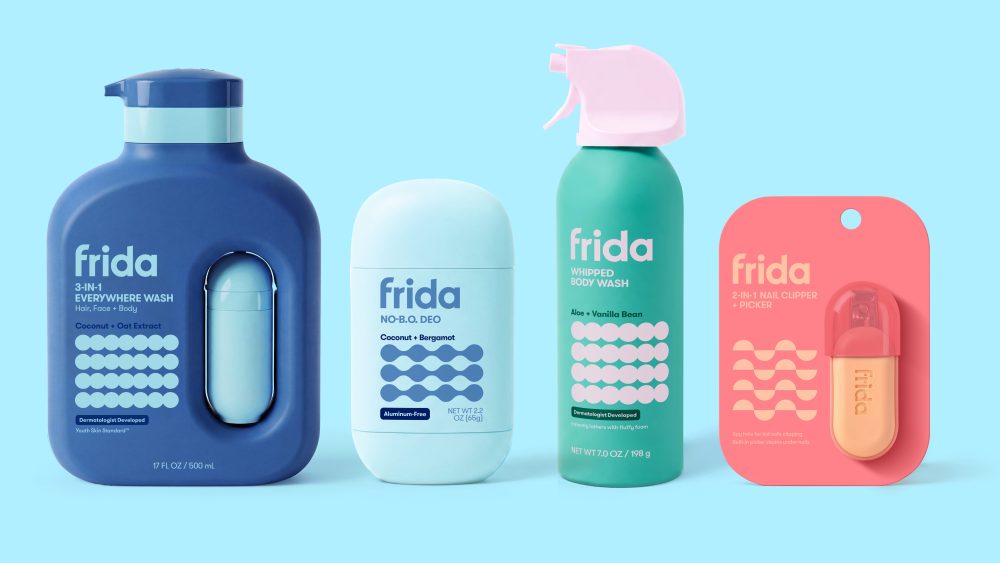
Frida is getting into kids’ personal care and hygiene, marking the fourth category in its portfolio as it looks to cater to audiences beyond the baby stage.
Frida for Kids is a line of 32 gender-neutral personal care and hygiene products, ranging from whipped body wash to oral care to nail clippers, launching this week at Walmart, Amazon and Frida.com. It’s the latest category entry for a company that became known for innovative products when it launched a snot sucker back in 2014 that became a baby registry staple. Since then, it has evolved its portfolio to the Frida Mom line of mass-market postpartum care products, as well as Frida Fertility.
Chelsea Hirschhorn, CEO and founder at Frida, said Frida for Kids is meant for children and families that have aged out of the “tear-free baby shampoo” stage, but aren’t ready for the “beard and balls” segment of the aisle. At the same time, the goal was to come up with products that could help kids learn hygiene rituals, like timed, light-up electric toothbrushes.
“We’re not just jumping into a personal care category with generic products,” she said in an interview with Modern Retail. “Parents can expect the same level of thoughtfulness and ‘Why didn’t I think of that?’ ingenuity that they’ve gotten throughout their first chapter of parenthood from us.”
The launch also points to how a company reconsiders its marketing and forges ahead after becoming the target of online commenters. Back in February, the company took flack online for its marketing messages that used sexual innuendos. Social media users criticized past advertisements and packaging copy for being too sexual or mature for baby products; in one example, the side of the box for Frida’s 3-in-1 thermometer asks, “How about a quickie?”
Hirschhorn said the conversations and criticism were a lesson in how quickly internet discourse can escalate, and credited her team for weathering the episode with grace. She said it’s been a reminder that brands and businesses have a responsibility to “meet the moment from a tone perspective,” and pay attention to brand hygiene.
“We’ve been able to filter out the noise from the real feedback and honest perspectives that were shared, and I think we’ve done a really great job showing up in a different way than maybe we did over a decade ago, in some of the things that were resurfaced,” she said.
She said while the team has learned from the feedback, they’re not backing down from humor. The Frida for Kids launch is still laced with real talk, with nods toward the realistic challenges of raising kids. The tagline for the new line is “Do It Yourself Care.” A teaser post on Instagram pulled out lines like “Kids know every Fortnite cheat code but can’t wash behind their earlobes,” and “Kids can spend 45 minutes filming a GRWM but can’t brush their teeth for two.” Marketing campaigns will span creators, earned and paid media, as well as retail, and the Walmart launch will have an end cap in the personal care section.
“The marketing remains committed to supporting parents with unbridled honesty and infusing a little bit of levity,” Hirschhorn said. “The feedback has been incorporated in a way that we show up for our core consumer, but they can always expect authentic storytelling and lived moments from the brand really honestly.”
Price point was also a big factor in formulation and development, Hirschhorn said. Though not necessarily the lowest price on the shelf — products run for $6.99-$19.99 — she said the goal was to deliver something accessible at a time when parents may be trading down.
“We’re within a sweet spot that I think will resonate with this consumer given the trade-offs they’re being forced to make in other areas of their life,” she said.
The last several years have seen a growing crop of brands and companies developing age-appropriate personal care products in the era of “Sephora tweens.” Evereden, a skin-care company for tweens and teens, launched in Sephora last fall after crossing $100 million in sales. Entrepreneur and actress Shay Mitchell co-founded Rini, a startup specializing in face masks for kids who want to participate in beauty rituals without the risk or cost of clinical ingredients. Unilever’s Dr. Squatch, for its part, launched the Lil’ Squatch line of bar soaps in kid-friendly scents like grape, melon and apple.
But entering the category requires the finesse of appealing to two distinct demographics: potentially price-conscious parents, as well as Gen Alpha youths who are looking for trendy products they see on social media. A PwC survey earlier this year found 97% of 7- to 14-year-olds say they decide what to buy independently at least some of the time. And 34% said they chose to buy skin care or beauty products on their own.
Frida for Kids has been in the works for about two years, led by Hirschhorn along with a dedicated internal team including her father and sister who are dermatologists. The inspiration came from her own experiences with four kids of varying ages who were aging out of baby products and needed to learn to master their own hygiene skills.
“The scent of musky woodsman doesn’t really ignite the spirit for my 12-year-old, nor does the Paw Patrol character,” she said. “And so I was left sort of bouncing between these two categories where I really want to graduate the diaper aisle, but nothing was meeting the need holistically when it came to morning and evening hygiene and health-care routines.”
The line includes body care basics like shampoo, conditioner and body wash that come with built-in travel containers, plus aluminum-free deodorants in a twist-up shape designed for smaller hands. Formulations are made with “non-actives that get the job done without any extras,” Hirschhorn said.
Hirschhorn said Frida fits into the space by focusing on the basics. One of the more innovative segments of the Frida for Kids collection is oral care; electric toothbrushes light up for two minutes to help kids learn to brush long enough, then glow red to show parents that the child actually brushed. The line’s toothpaste comes in a dispenser that releases a dentist-recommended “pea-sized” pump, and the flosser is braces-friendly.
“Innovation alone is one thing, but being able to leverage the cultural tailwinds is a really important part of our strategy,” she said. “We’re not purporting to solve for fun and games in incorporating beauty and skin care at a younger age. We’ll leave that to others. But we are saying that if they are going to engage in it, they should at least have the basics down pat.”